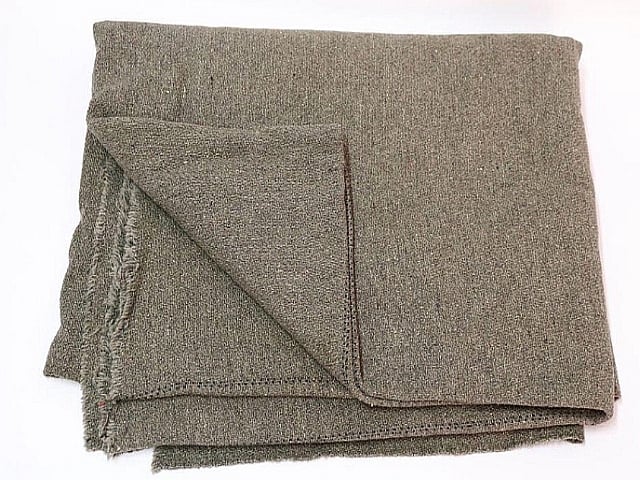
Blanket belonging to prisoner Nóra Stark (*1919) from the Penig subcamp of Buchenwald concentration camp
This grey-green wool blanket served Nóra Stark as a sleeping blanket in the Penig subcamp.
In 2000, the blanket was donated to the collection of the Buchenwald Memorial by former prisoner Rózsa Deutsch for the exhibition "Forgotten Women of Buchenwald".
Signature: D.4-0062, Inventory number: 02766.
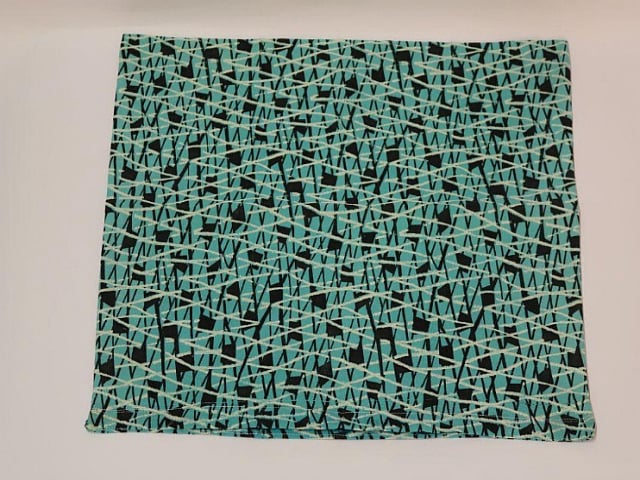
Hand-sewn pillowcase made of light blue cotton fabric with a black-and-white pattern, with three buttons, from the possession of Katalin Grünblatt (*1923), a prisoner in the Penig subcamp of Buchenwald concentration camp.
The pillowcase was donated in 2000 by former prisoner Rózsa Deutsch to the collection of the Buchenwald Memorial for the exhibition "Forgotten Women of Buchenwald".
Signature: D.4-0064, Inventory number: 02768.
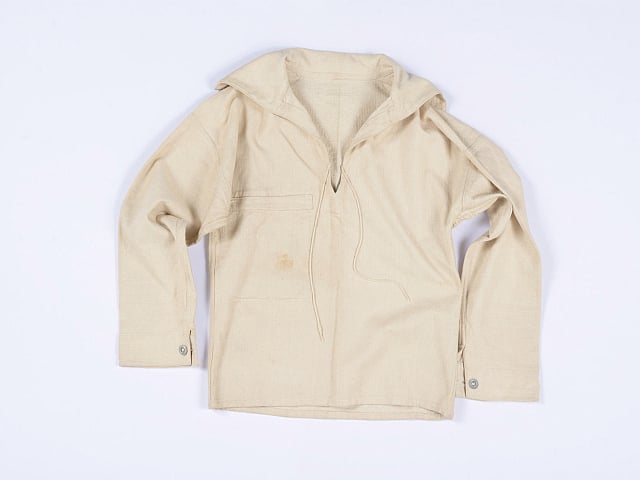
Civilian shirt worn by Erzsébet Kiss (*1915) in Penig, a subcamp of the Buchenwald concentration camp. Kiss was deported from Budapest, Hungary, to Ravensbrück camp, from there to Penig and liberated on a death march.
The original is held in the collection of the Yad Vashem Memorial.
Accession Number: 2677/2, Item Number: 6960770.
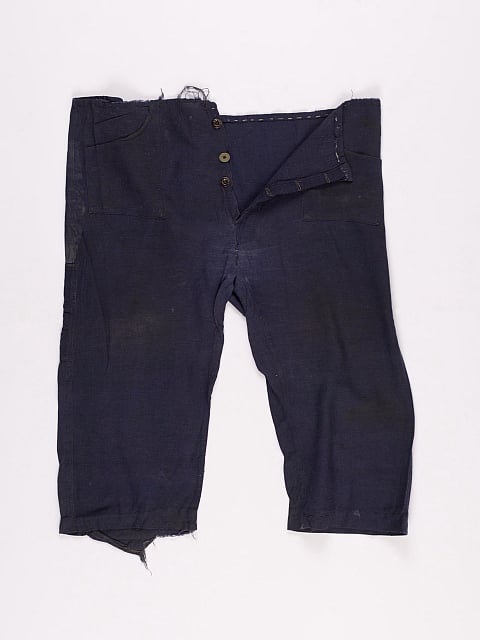
Short pants worn by Erzsébet Kiss (*1915) in Penig, a subcamp of the Buchenwald concentration camp. Elizabeth was deported from Budapest, Hungary, to Ravensbrück Camp, from there to Penig and liberated on a death march.
The original is held in the collection of the Yad Vashem Memorial.
Accession Number: 2677/1, Item Number: 6960726.
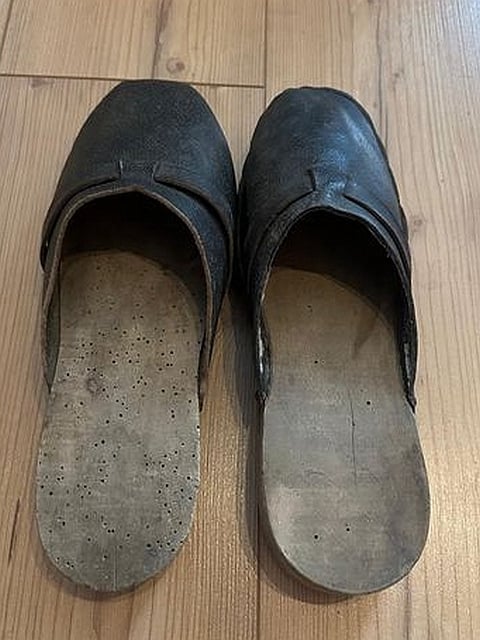
Prisoners in many concentration camps were forced to wear comparable wooden clogs. The women in the concentration camp Penig also wore similar shoes, as shown in the adjacent photo.
Courtesy of Roland Albrecht, Penig, 2025.
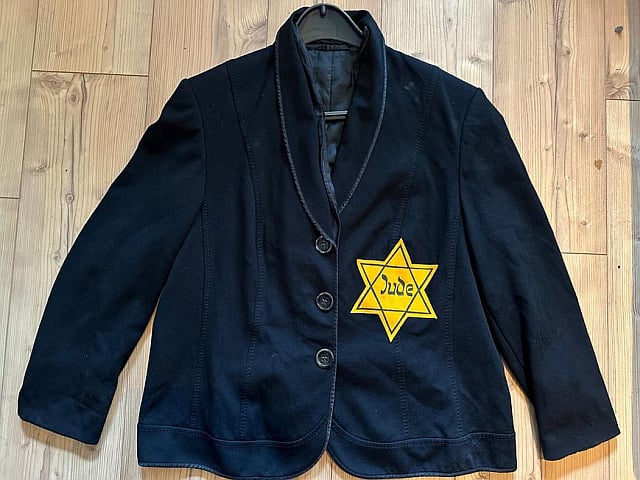
In Hungary, wearing the yellow star (a six-pointed star at least 10 x 10 cm in size, in “canary yellow” color, without inscription) was made mandatory by decree on 20 March 1944, the day after the German occupation. The decree came into force on 5 April 1944.
Recreated by Roland Albrecht, Penig, 2025.
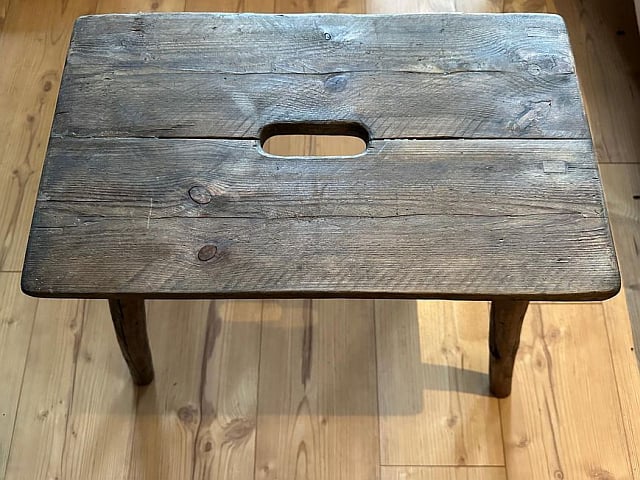
The furnishings of the wooden barracks in which the women were housed were very sparse. In addition to the three-tier wooden bunk beds, there was a small stove (which, however, could only be used if the women were able to find firewood), a few wooden chairs, a few simple plank tables, and similar wooden stools.
Recreated by Roland Albrecht, Penig, 2025.
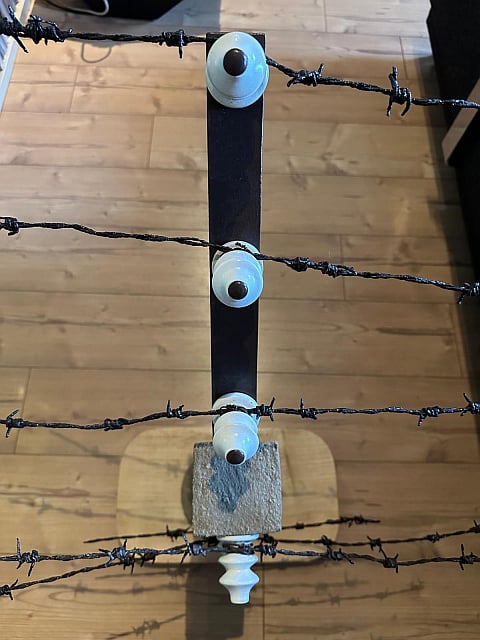
Imprisoned like dangerous criminals, the women in the concentration camp Penig were confined behind an electrified barbed wire fence, complete with guard towers and external surveillance. The electricity for the fence had to be specially routed across the fields from the local power substation.
Recreated by Roland Albrecht, Penig, 2025.
Drag & Drop Website Builder